Design journal
Exhibition design insights.
Practical design notes — 27 articles covering exhibitions, retail displays, kiosks, event environments and product concepts.
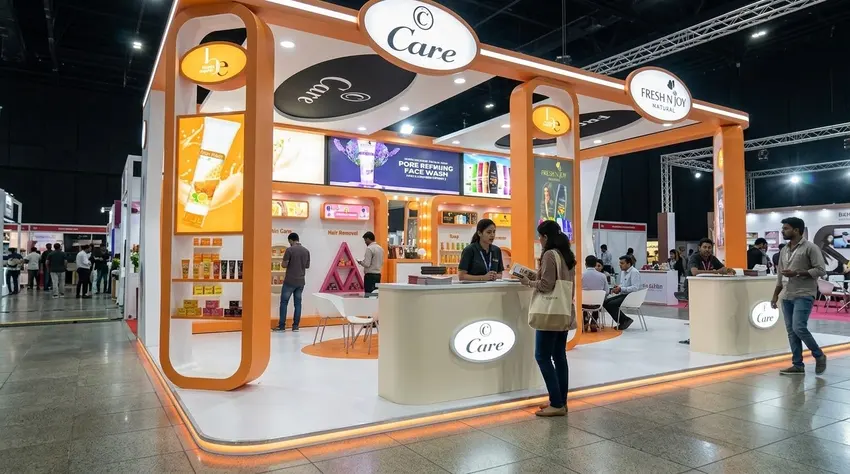
Exhibition stand design brief: what to prepare before hiring a designer
A useful exhibition stand brief reduces redesigns before the first 3D view. It describes the space, the people using it and the one message visitors should remember—not only the requested visual style.
Practical design notes ↗Small exhibition booth layouts that feel open and focused
Small stands can perform well when every element has a job. The challenge is not fitting more objects into the footprint; it is making the purpose legible from the aisle.
Practical design notes ↗Visitor flow in exhibition stand design: a practical layout approach
Visitor flow is the relationship between what people notice, where they pause and how they leave. A visually impressive stand is less effective if the reception point interrupts every route.
Practical design notes ↗Exhibition stand lighting: visibility, atmosphere and product focus
Lighting should help visitors locate a brand and understand its products. It is easy to overuse effects in a 3D image, but the real priority is readable graphics and useful illumination.
Practical design notes ↗3D exhibition stand rendering: from brief to review-ready visuals
A 3D render is a communication tool. It can show material direction, branding and proportions before production, but decisions are stronger when supported by a clear plan and assumptions.
Practical design notes ↗Exhibition stand signage and graphics that visitors can understand
Trade-show graphics compete with hundreds of nearby messages. The strongest designs usually make one promise easy to scan and leave detail for closer conversation.
Practical design notes ↗What affects an exhibition booth design budget?
A design fee and a booth production budget are different things. Clarifying the scope early prevents a beautiful concept from being mistaken for a fixed installation price.
Practical design notes ↗Custom vs modular exhibition stand design: choosing the right direction
Custom and modular solutions solve different problems. The right starting point depends on the event frequency, brand expression and constraints of the venue—not the category with the most dramatic images.
Practical design notes ↗Corner, inline and island exhibition booths: layout differences
The number of open sides changes nearly every layout decision. Before sketching an attractive facade, confirm where visitors can actually enter and which views matter most.
Practical design notes ↗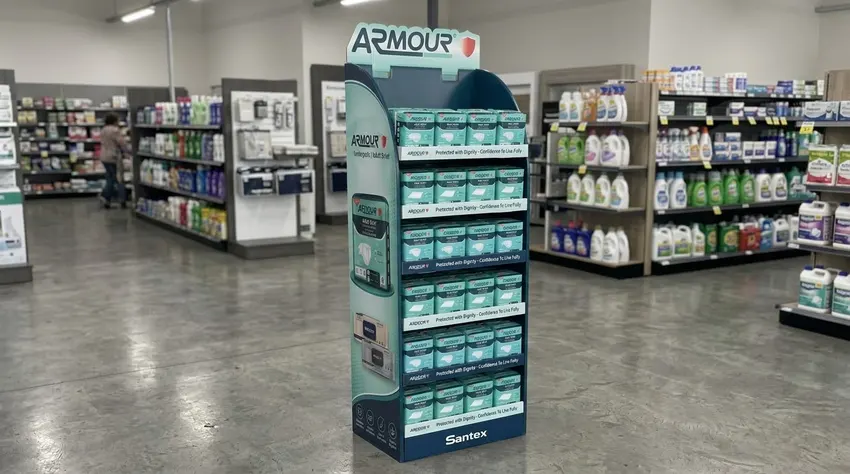
Retail display design principles for stronger shelf presence
A successful retail display has to work in a busy store, not just in a clean render. The product, brand and shopper interaction should remain clear despite surrounding visual noise.
Practical design notes ↗Point-of-sale display design brief: inputs your designer needs
For a point-of-sale display, product data is as important as the visual direction. Without shelf dimensions or stock quantities, early concepts may be difficult to implement.
Practical design notes ↗Countertop vs floor-standing retail displays: a design comparison
Countertop and floor-standing displays offer different levels of visibility, capacity and shopper interaction. Choosing by visual appeal alone can lead to the wrong in-store footprint.
Practical design notes ↗Retail gondola and endcap display design: key considerations
Gondola and endcap displays need to perform within fixed retail systems. A successful concept respects shelf positions while making promotions easy to recognize.
Practical design notes ↗Choosing materials for retail display concepts
Material choice affects the visual language, durability and feasibility of a retail display. It should be discussed alongside the campaign duration and handling conditions.
Practical design notes ↗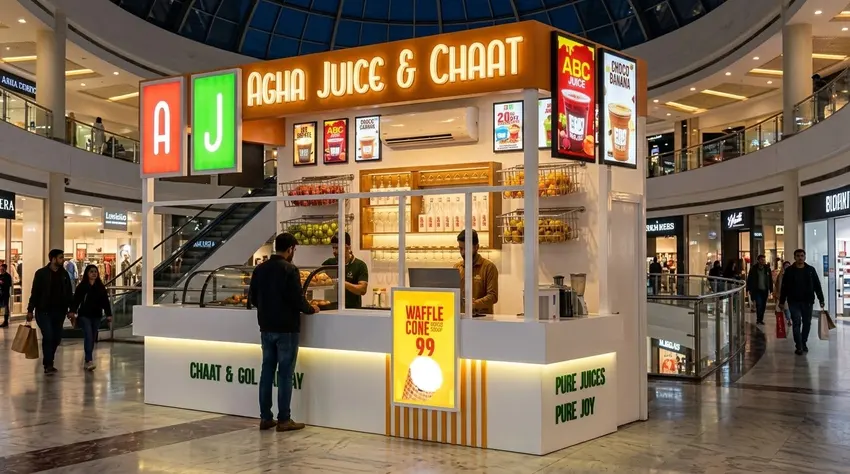
Mall kiosk design checklist: brand, circulation and operations
A mall kiosk is simultaneously a small retail space and a highly visible brand object. It needs to look appealing from several sides while accommodating real staff tasks.
Practical design notes ↗How to plan customer flow around a retail kiosk
Unlike an enclosed shop, a kiosk is approached from multiple directions. The counter, queue and signs should help shoppers understand where to stop without causing friction in shared circulation.
Practical design notes ↗Food and beverage kiosk design: front-of-house planning
Food and beverage kiosks need a convincing storefront and a logical service sequence. Visual design must be coordinated with local hygiene, utilities and operational requirements.
Practical design notes ↗Kiosk branding that works from every approach
A kiosk is rarely viewed from one perfect angle. Good branding makes its identity recognizable from far away and the offering understandable when someone gets closer.
Practical design notes ↗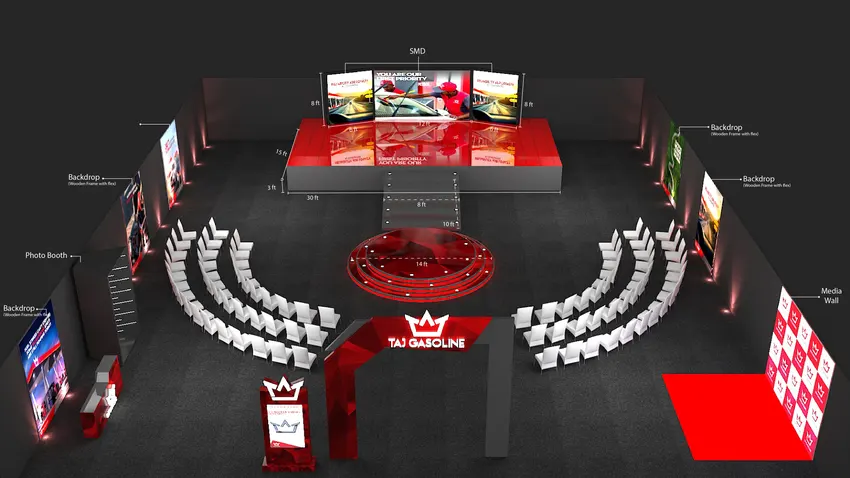
Event 3D design: translating a brand idea into a spatial concept
A successful event concept should explain how people move, where the brand appears and what experiences take place. The render is a way to test those choices before the production team acts.
Practical design notes ↗Experiential brand activation design: making the interaction clear
Brand activation is strongest when visitors immediately understand what to do. The spatial design should make the participation journey obvious without relying on lengthy instructions.
Practical design notes ↗Reviewing event 3D visuals before production
Event render reviews should be decision meetings, not only reactions to colours. A structured review makes it easier to separate approved creative direction from unresolved operational issues.
Practical design notes ↗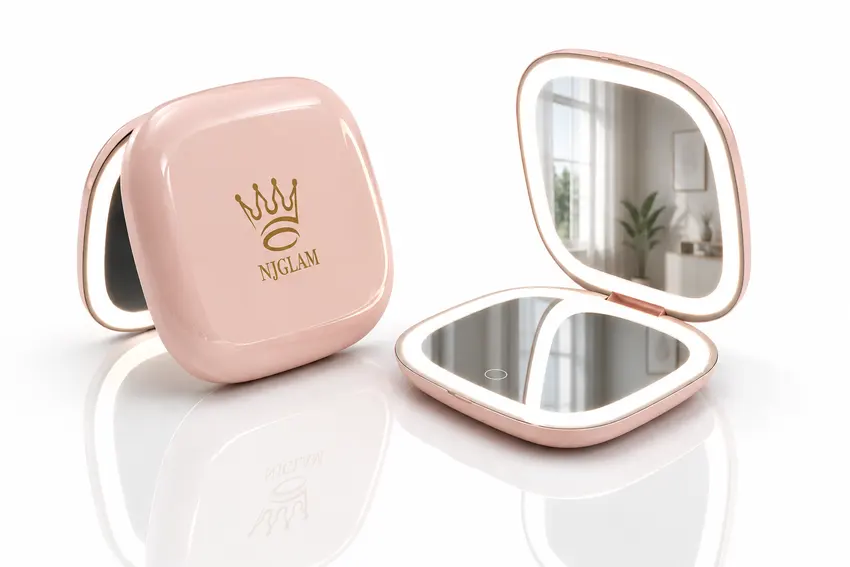
Product concept visualization: presenting an idea before production
Product visualization helps stakeholders assess form, colour and intended use before physical samples exist. It is most useful when the visual claims are honest about what is concept and what is confirmed.
Practical design notes ↗Product design vs product display design: what is the difference?
A product concept concerns the object itself; a product display concerns the way that object is presented to customers. The two disciplines meet at pack size, visibility and user behaviour.
Practical design notes ↗Hiring a freelance exhibition stand designer for international projects
Working with a remote designer can give you access to specialist concept and visualization skills without requiring the designer to be the local stand builder. Success depends on an organized brief and clear responsibilities.
Practical design notes ↗How to brief a remote 3D designer across time zones
Remote work is easiest when everyone agrees on what a complete decision looks like. A tidy document, labelled files and a scheduled feedback window usually beat fragmented messages.
Practical design notes ↗Exhibition stand design vs fabrication: who does what?
Design and fabrication are connected but different services. A freelancer may shape the concept and visualization while a local contractor remains responsible for engineered construction and installation.
Practical design notes ↗Exhibition stand design deliverables explained
Different design deliverables answer different questions. A client can make better decisions by specifying whether they need a creative concept, visual approval or construction coordination.
Practical design notes ↗No articles in this category.